
Redness & Visible Vessels · Eau Claire
A more even tone.
A thoughtful
place to start.
Whether you notice lingering redness or small vessels around your nose and cheeks, understanding your skin comes first.
We’ll talk through your concerns, assess whether light-based treatment is appropriate, and explain your next step with care.
Understand what you’re seeing
Similar concerns.
Different starting points.
Persistent redness.
Color that stays between flare-ups can have several causes. A dermatologist can help identify the cause before you choose cosmetic treatment.
Small visible vessels.
Fine red lines on the face may be suitable for focused light treatment. Their size, location, and your skin tone help guide the decision.
Flushing & sensitivity.
If your skin often feels hot, stings, or reacts easily, mention it at your consultation. A gentler routine and medical guidance may come first.
Protect from the sun.
Use a broad-spectrum SPF 30 or higher, seek shade, and follow reapplication instructions. Sun exposure can aggravate redness-prone skin.
Simplify your skincare.
Choose a gentle cleanser and moisturizer. Avoid scrubbing or pushing through burning and stinging; bring your current products to your consultation.
Notice your patterns.
Heat, certain foods, alcohol, or other personal triggers may affect flushing. Keep track of what you notice and discuss it with your dermatologist.
Before you book
Clear answers.
A confident next step.
Is all facial redness rosacea?
No. Irritation and other skin conditions can also cause redness. A dermatologist can assess persistent symptoms and determine whether you need medical treatment before cosmetic care.
Can BBL cure rosacea?
No. Light treatment may improve selected visible signs, but rosacea needs ongoing management. Your dermatologist may recommend medication, gentle skincare, and changes to reduce flare-ups.
Is light treatment suitable for every skin tone?
Suitability depends on the device, settings, skin tone, and medical history. Tell your provider about recent tanning and any previous pigment changes. Risks include burns, blistering, color changes, and scarring.
What does treatment feel like?
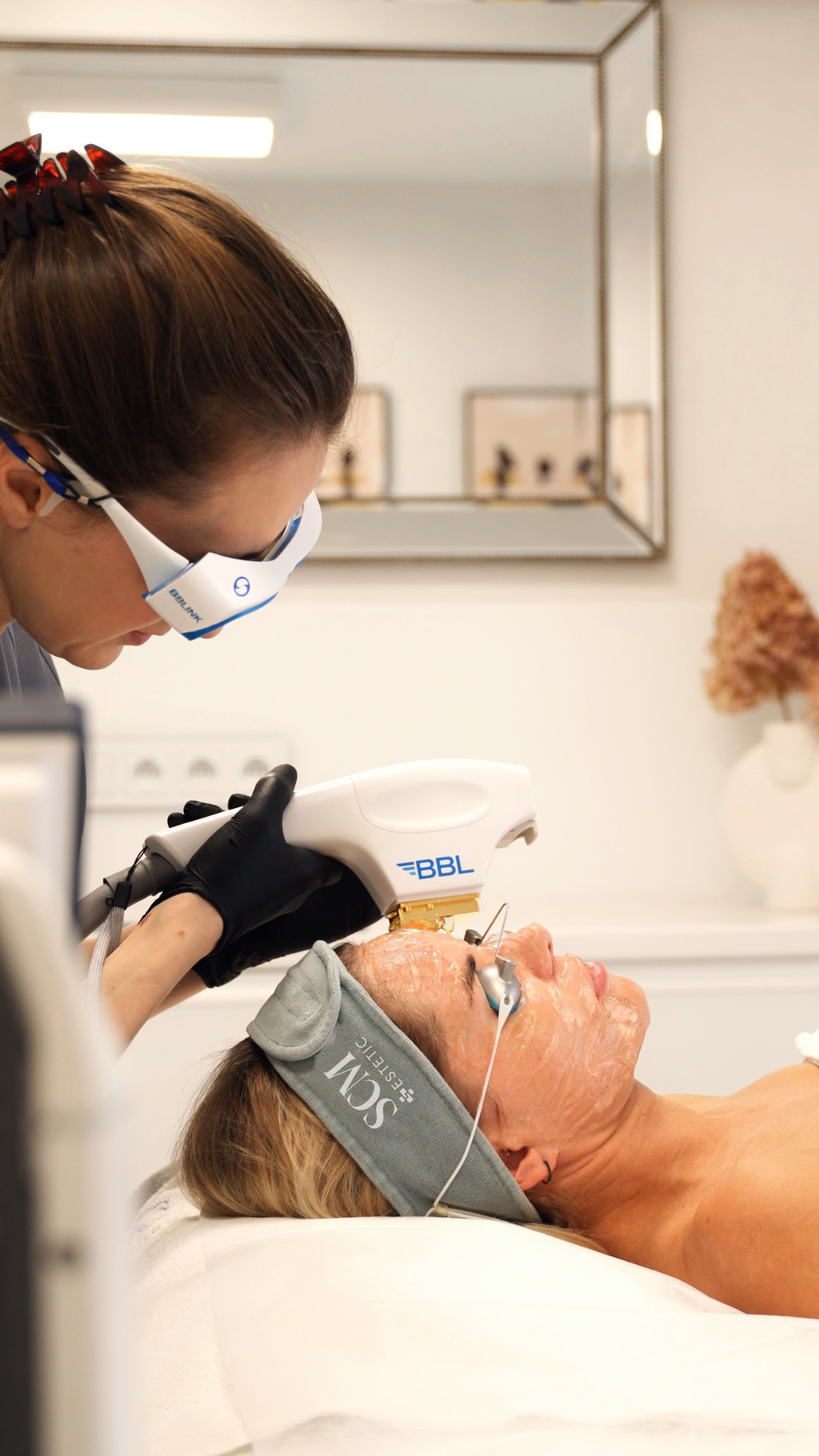
You may feel warmth and a brief snapping sensation. Protective eyewear is required. Your provider will explain the process and discuss comfort before starting.
Will I need time to recover?
Temporary redness or swelling can occur. Recovery varies with the treatment and your skin’s response. Ask about your expected downtime before scheduling around an event.
How many appointments will I need?
This depends on the vessels, treatment area, and your response. Your provider will outline a suggested plan and when to review progress. New vessels or redness can develop over time.
What should I share before treatment?
Bring your skincare and medication list. Mention diagnosed skin conditions, light sensitivity, recent procedures, sun exposure, and any history of unusual healing or pigmentation.
What if I’m unsure where to start?
Call Harmony at (715) 514-2672. We can explain the available appointments and help you decide whether to begin with a consultation or seek a dermatologist’s assessment first.
Your next step
Less guesswork.
More understanding.
Bring your questions. We’ll take time to discuss your skin, explain suitable options, and help you move forward with clarity.